Why Does My Puppy Bite My Feet When I Walk? How to Stop It
If your puppy bites your feet or grabs your trousers every time you walk across the room, even a simple trip to the kitchen can become frustrating. You move forward, your puppy chases your ankles, and suddenly those tiny teeth are back on your skin. It is a common problem for puppy owners, but that does not mean you have to put up with it indefinitely.
The good news is that puppies often bite moving feet because of play, excitement, teething, or their natural interest in movement. It does not automatically mean your puppy is aggressive. The most effective approach is to understand what triggers the behavior, teach your puppy what to do instead, and respond consistently whenever the biting starts.
In this guide, you will learn why puppies target feet and ankles, how to stop puppy biting while walking, which common mistakes can make the behavior worse, and when extra training support may be needed.
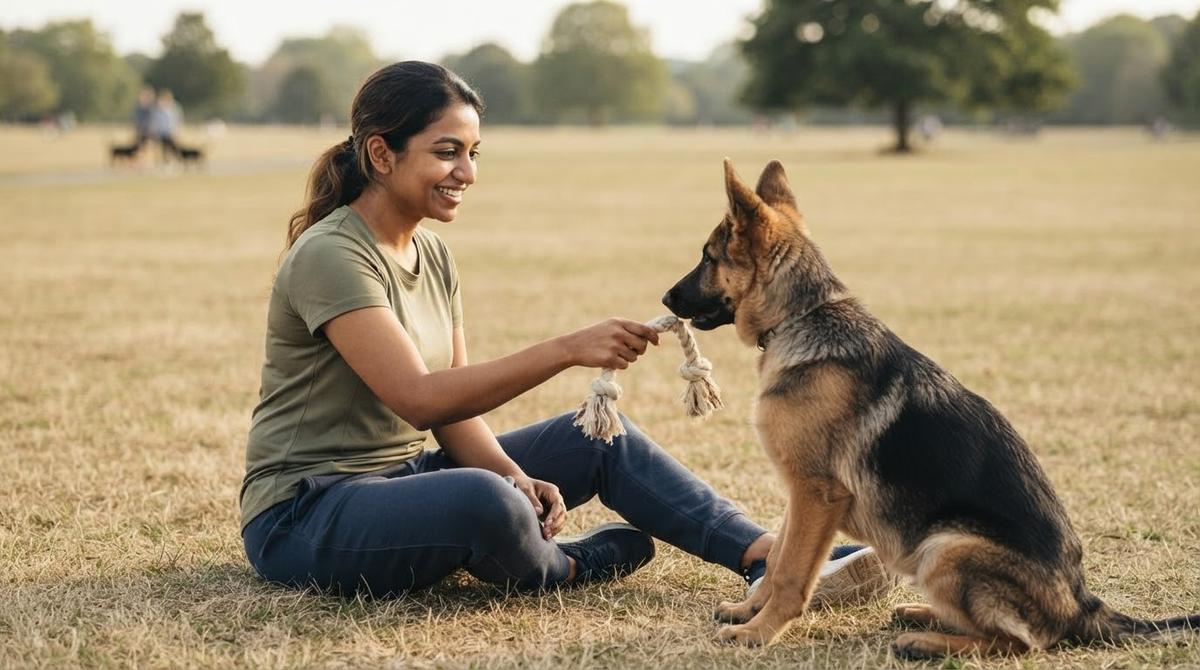
Redirecting a puppy toward an appropriate toy helps teach a better way to play.
Why Does My Puppy Bite My Feet When I Walk?
Before you can stop ankle biting, it helps to understand what your puppy may be trying to achieve. The same behavior can have several causes, so pay attention to when it happens and what your puppy does immediately before and after biting.
1. Moving Feet Trigger Your Puppy's Play Instinct
To a young dog, moving feet can be exciting targets. Your shoes move across the floor, your trousers swing, and your direction changes unexpectedly. These movements can encourage chasing, grabbing, and tugging.
Some puppies also display behaviors associated with chasing and herding. Breeds developed for herding may be especially interested in moving legs, although puppies of many breeds can show this behavior.
If your puppy starts chasing your ankles as soon as you walk away, movement itself may be part of the trigger. Pulling your feet away quickly can make the game even more exciting.
2. Teething Makes Chewing More Appealing
Puppies explore their surroundings with their mouths, and teething can increase their desire to chew. Fingers, shoes, trouser legs, and ankles may become convenient targets when a puppy has not learned which objects are appropriate to bite.
Offer safe, puppy-appropriate chew toys and supervise your puppy while chewing. Choose toys suitable for your dog's size and chewing strength, and remove any damaged items that could become choking hazards.
3. Your Puppy May Be Overtired or Overexcited
Not every ankle attack means your puppy needs more exercise. Some puppies become especially mouthy when they are tired, overstimulated, or struggling to settle after an exciting play session.
Notice whether the biting tends to happen in the evening, after visitors arrive, or when play has continued for a long time. If you see a pattern, try a calmer routine with appropriate rest, short training sessions, and quiet activities.
4. Your Puppy Has Learned That Biting Gets Attention
Imagine your puppy grabs your trouser leg. You laugh, talk loudly, move your foot away, and start pushing the puppy back. Even if you are trying to stop the behavior, your puppy may interpret all that movement and attention as part of an exciting game.
This does not mean you caused the problem intentionally. It simply means your response may be rewarding the behavior without you realizing it. Changing what happens immediately after the bite can help your puppy learn a better habit.
How to Stop Puppy Biting Ankles: 6 Practical Steps
The goal is not to frighten your puppy into stopping. It is to make ankle biting less rewarding and teach a safe, acceptable alternative. Use the same approach consistently so your puppy can understand what you expect.
1. Stop Moving When the Biting Starts
When your puppy grabs your ankle or trouser leg, stop walking as soon as it is safe to do so. Keep your body still, avoid waving your feet around, and do not turn the moment into a chase.
Wait briefly for your puppy to release you. If necessary, use a suitable toy or a treat to encourage disengagement without pulling your leg away or wrestling with the puppy. Once your puppy releases, calmly redirect them toward an appropriate activity.
Standing still will not solve every case immediately, but it can remove the movement that makes your feet exciting. If your puppy becomes more aroused or continues biting hard, calmly create distance using a barrier or another safe method.
2. Keep a Suitable Toy Within Reach
One of the easiest ways to prevent repeated ankle biting is to have a suitable toy ready before your puppy gets excited. A soft tug toy or another puppy-safe toy may work well, depending on your dog's age and chewing style.
When you notice your puppy preparing to chase your feet, offer the toy before the biting begins. Praise your puppy for engaging with the toy instead of your clothes or skin.
Try different toys to discover what your puppy enjoys. This guide to choosing suitable dog toys and comfortable bedding can also help you think about your puppy's play and resting environment.
3. Reward Calm Behavior Around Moving Feet
Do not wait until your puppy bites before interacting with them. You can also teach the behavior you want by rewarding calm moments.
- Ask your puppy to sit or stand calmly before you begin walking.
- Take one or two steps while your puppy remains calm.
- Reward your puppy with a small treat or gentle praise.
- Gradually increase the number of steps as your puppy succeeds.
- If biting starts, stop the exercise, reset calmly, and make the next attempt easier.
Keep these sessions short and practise in a quiet room at first. Once your puppy understands the exercise, gradually practise in other parts of your home. Frequent, easy successes are more useful than one long session that leaves your puppy overstimulated.
4. End the Game Briefly When Biting Continues
If your puppy keeps biting after you stop moving and offer a toy, calmly end the interaction. Step behind a secure barrier or move to a place where your puppy cannot continue grabbing your feet. Keep the break brief and quiet, then try again when your puppy has settled.
A short pause removes access to the game without frightening your puppy. Avoid shouting, hitting, pushing the puppy down, or holding its mouth shut. These reactions can create fear or increase excitement, and they do not teach the puppy what to do instead.
5. Check Whether Your Puppy Needs Rest
Young puppies need plenty of sleep, and their ability to manage excitement is still developing. If ankle biting repeatedly appears after a busy period, try a quiet break in a comfortable, safe resting area.
Provide regular opportunities for appropriate play, toilet breaks, sniffing, and rest. More exercise is not always the answer: exhausting a puppy can sometimes make it harder for them to settle.
A predictable daily routine can make it easier to identify patterns in your puppy's behavior. For broader advice on everyday care, see this guide to building healthy dog care habits.
6. Make Sure Everyone Uses the Same Training Method
Training becomes confusing when one person encourages ankle chasing as a game while another person tries to stop it. Ask everyone in your household to follow the same basic rules: avoid exciting foot movements, redirect biting to toys, and reward calm behavior.
If your puppy frequently bites visitors, children, or other household members, manage interactions carefully. Young children should never be expected to handle a biting puppy on their own. Use adult supervision and barriers when needed to keep everyone safe.
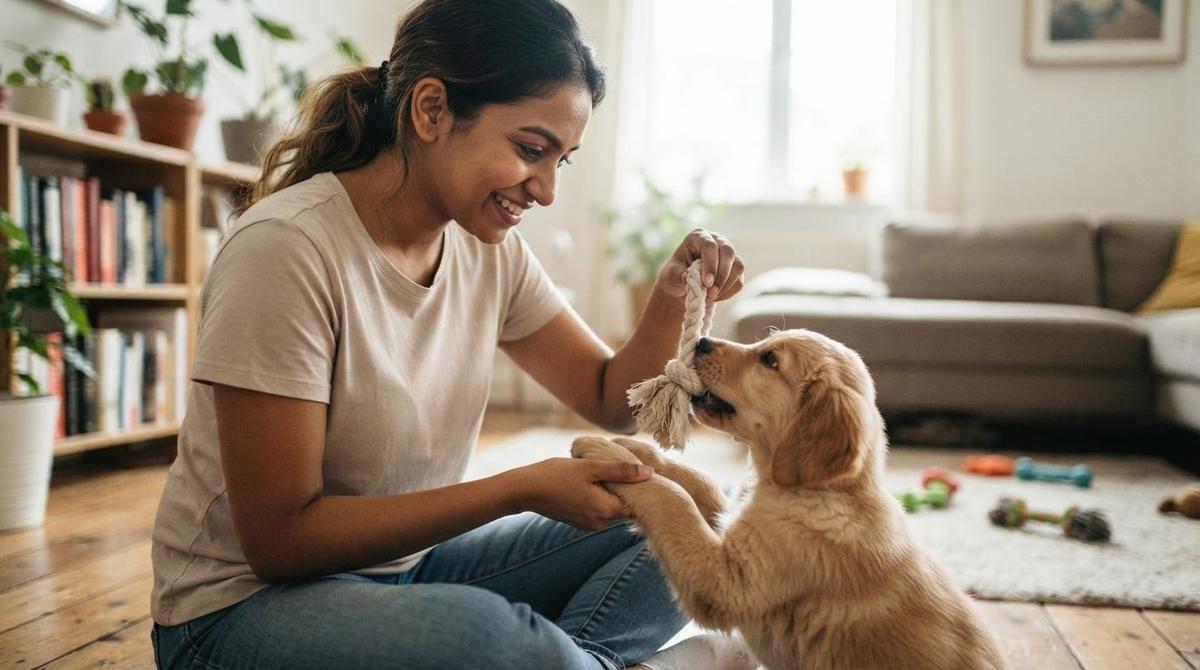
Short, positive training sessions help puppies learn alternative behaviors.
Common Mistakes That Can Make Puppy Biting Worse
Sometimes the problem continues because a puppy receives mixed signals. Watch out for these common mistakes when trying to stop puppy biting feet and ankles.
- Pulling your feet away quickly: Fast movement may encourage chasing and grabbing.
- Shouting or squealing: Some puppies become more excited in response to loud reactions.
- Using your hands to wrestle: Rough play can teach a puppy that grabbing skin is part of the game.
- Offering a toy too late: Keep a toy nearby and redirect your puppy before excitement escalates whenever possible.
- Expecting instant results: Puppies need repetition and consistency to develop reliable habits.
Progress may not be perfectly steady. Your puppy might respond well one day and struggle the next, especially when tired or distracted. Focus on the overall pattern rather than expecting every training attempt to succeed.
When Should You Be Concerned About Puppy Biting?
Playful mouthing and ankle chasing are common in young dogs, but not every biting incident should automatically be treated as normal puppy behavior.
Seek advice from a veterinarian if the biting starts suddenly, appears connected to pain, or occurs alongside unusual changes in your puppy's health or behavior. A qualified, reward-based trainer or veterinary behavior professional can help if the biting is intense, persistent, difficult to interrupt, or accompanied by stiff body language, repeated growling, or injuries.
In the meantime, avoid situations that repeatedly trigger biting and use safe barriers to prevent injuries. Do not punish warning signals such as growling; seek professional guidance to understand what your puppy is communicating.
Frequently Asked Questions
Why does my puppy bite my feet only when I walk away?
Your moving feet may trigger chasing and play behavior. Your puppy may also have learned that grabbing your trousers makes you stop, turn around, or interact with them. Practise rewarding calm behavior as you take a few steps away.
How do I stop my puppy from biting my ankles while walking?
Stop moving when it is safe, avoid turning the incident into a chase, and redirect your puppy toward a suitable toy. Reward calm behavior and practise short walking exercises when your puppy is relaxed.
Should I say no when my puppy bites my feet?
A calm verbal cue may be useful if you have taught your puppy what it means, but repeating “no” alone usually does not teach an alternative behavior. Combine a consistent response with redirection and rewards for appropriate choices.
At what age do puppies stop biting ankles?
Many puppies become less mouthy as they mature, but there is no exact age when ankle biting automatically stops. Teething, temperament, excitement, and training all influence progress. Consistent practice can help establish better habits.
Should I punish my puppy for biting my feet?
No. Avoid physical punishment, frightening reactions, or forcefully holding the puppy's mouth shut. Calmly interrupt the interaction, create distance if necessary, redirect the puppy, and reward appropriate behavior instead.
What if my puppy bites harder when I stand still?
If standing still increases your puppy's excitement, calmly use a safe barrier or step away without turning it into a chase. Try again later with a suitable toy and an easier training exercise. Seek professional help if the biting is intense or causes injuries.
Final Thoughts
When your puppy bites your feet every time you walk, it can feel as though you cannot take a single step without starting another game. But the behavior often becomes easier to manage when you identify the trigger and respond consistently.
Start with three simple habits: stop rewarding ankle chasing with exciting movement, keep an appropriate toy within reach, and reward your puppy for staying calm while you walk. Make sure your puppy also has suitable rest and a predictable daily routine.
Be patient with the learning process. You are not simply trying to stop a puppy from biting; you are teaching them how to live comfortably and safely alongside people. If the behavior is unusually intense or does not improve, a qualified professional can help you find a plan suited to your puppy.


No comments:
Post a Comment
Join the discussion below. Please keep your comments relevant to the topic (Pet Care) and respectful. Your experience is valuable to our community!