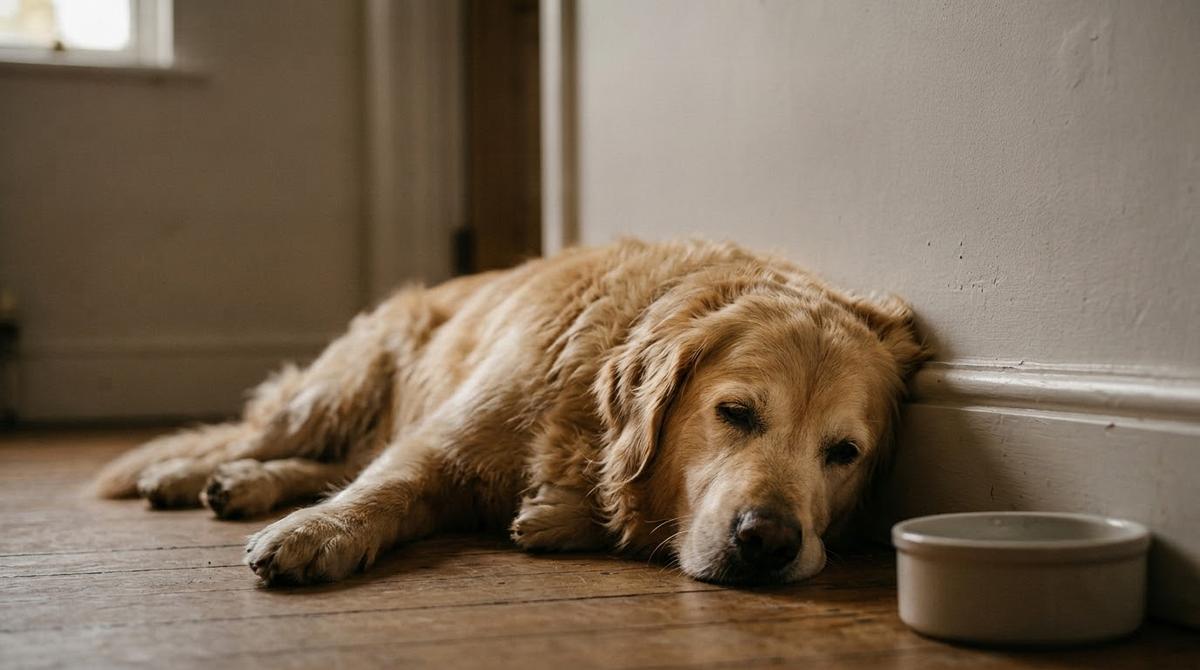
You walk into the room and your dog is standing in the corner, forehead pressed flat against the wall. He isn't sleeping. He isn't playing. When you call his name, he barely reacts. He just stands there, pushing.
It's a scary thing to see, and many owners aren't sure what it means. Is it a strange habit? Is he tired? Is something wrong with his brain?
Here's the short answer. Head pressing is almost always a sign of serious illness, so treat it as a medical emergency. Exhaustion alone doesn't explain it.
Weakness Doesn't Explain Head Pressing
It's easy to think "he's just worn out." A weak, underfed, or stressed dog can look completely drained, and a wall can look like the only thing holding him up.
Here's the catch. A dog who's too weak to stand may prop himself against a wall, and from across the room that can look a lot like head pressing. But true head pressing is different. It's a compulsive pushing of the head into a surface, and it's usually a neurological sign, meaning something is wrong with the brain or the nervous system.
You can't reliably tell the two apart at home. A very sick dog can be weak and neurologically affected at the same time. That's why vets want to see every dog that does this, right away.
What Head Pressing Looks Like
Head pressing means a dog pushes the top of its head against a wall, a door, a piece of furniture, or a corner, and holds it there. It doesn't look like affection. It looks stuck.
- The dog stands or sits with his forehead against a hard surface for minutes at a time.
- He doesn't respond much when you call his name.
- He may wander into a corner and not seem to know how to get out.
- He may circle, stumble, drool, or stare at nothing.
- He keeps pressing even though it must be uncomfortable.
The Medical Reasons Behind Head Pressing
A vet will need to run tests to find the exact cause, but these are the ones that come up most often.
Brain Tumors
A tumor can grow inside the skull and push on the surrounding brain tissue. That pressure can disrupt normal brain function, and head pressing is one of the signs. It's more common in senior dogs, though it can happen at any age.
Strokes
A stroke happens when blood flow to part of the brain is blocked or a vessel bleeds. The signs can come on suddenly: head pressing, circling, stumbling, a head tilt, or a dog who suddenly seems confused. Some dogs recover with care, but they need a vet to find out what's behind it.
Toxins and Liver Disease
Some poisons, lead among them, can damage the nervous system. A failing liver is another culprit. When the liver can't clear toxins from the blood, they can build up and affect the brain. Vets call this hepatic encephalopathy, and puppies born with a liver shunt can be affected too. If there's any chance your dog ate something he shouldn't have, tell the vet straight away.
Other causes include brain inflammation, fluid build-up in the skull, head injuries, and certain infections. It's a long list, and that's exactly why guessing at home doesn't work.
It also helps to know your dog's normal habits. A dog who's acting so clingy all of a sudden, or one who's hiding pain, may be telling you something is off before the head pressing even starts. And don't confuse the real thing with the loving kind of leaning. Our post on the signs your dog loves you explains what that looks like.
When to See a Vet Immediately
If your dog presses his head against a wall, a door, or a piece of furniture, call a vet or an emergency clinic right away. Don't wait for the next morning to see if he's better. Some of the causes can be treated, and early care often gives a dog his best chance.
Here's what to do while you arrange the visit:
- Record a video. Dogs often stop the behavior once they're in a new place with strange smells and sounds. A short clip lets the vet see exactly what you saw at home.
- Write down other changes. Note any circling, drooling, vomiting, seizures, trouble seeing, or a shift in personality, and when each one started.
- Bring anything he may have eaten. If poisoning is possible, take along the packaging, plant, or product.
- Don't give human medicine. Even common painkillers can be dangerous for dogs.
- Keep him safe and calm. Move him away from stairs and sharp edges, keep the room quiet, and don't scold him. He can't help it.
If you notice any of these signs, don't wait to see if it passes. Call your vet or an emergency clinic right away, even if it's late at night.
Frequently Asked Questions
Is head pressing always a brain tumor?
No, but you can't rule it out at home. A brain tumor is one possible cause, especially in older dogs. Strokes, brain inflammation, liver disease, poisoning, and head injuries can all cause it too. Only a vet can tell which one it is, so don't wait to find out.
Why does my dog press its head against me?
If your dog leans into you with a soft, relaxed body, it's most likely affection. He feels safe and wants to be close. It's a different thing from pushing his head hard into a wall or furniture and staying there, which needs a vet's attention.
How do I know if it's pain or something else?
You can't tell from the outside, and that's okay. A dog in pain may rest his head on furniture or seem withdrawn. A dog that's head pressing pushes against a surface, often seems out of touch with what's around him, and may circle or stumble. Either way, a vet needs to see him.
What should I do first if I see my dog head pressing?
Call your vet or an emergency clinic right away. Take a short video of the behavior, write down any other changes you've noticed, and bring anything your dog may have eaten. Don't give human medication, and don't scold him. He can't help it.
Sources
- PetMD: Head Pressing in Dogs
- Southeast Veterinary Neurology: Dog Head Pressing
- Dogster: Head Pressing in Dogs
This article is for general information only. It isn't a substitute for an examination by a qualified veterinarian. If your dog is showing any of these signs, contact a vet right away.


No comments:
Post a Comment
Join the discussion below. Please keep your comments relevant to the topic (Pet Care) and respectful. Your experience is valuable to our community!